Stainless steel is a popular architectural metal, favored for its sleek look and durability. This strong alloy combines iron, chromium and a few other metals, making it particularly resistant to corrosion. Stainless steel is used in a variety of applications, from construction to interior design.
There are many grades to choose from, the most common being 300 series, 400 series, low-carbon variants and other specialty grades. You will want to use a grade that is both sturdy and corrosion-resistant to prevent rust and cracking.
Explore the different types of stainless steel to find the best option for your architectural project.
Types of Stainless Steel
There are many different grades of stainless steel. Based on structure and composition, stainless steel is classified into these four metallurgical families:
- Austenitic: This group is preferred for its excellent corrosion resistance and ease of fabrication, and constitutes the most widely used grades across all applications. This family is non-magnetic when annealed, and combines a high chromium content with small amounts of nickel for durability. Austenitic stainless steel is used in a wide range of applications, including building exteriors, railings and aerospace components. Grades 304 and 316 are the most common examples.
- Ferritic: As the second most common family, this magnetic, nickel-free stainless steel offers good corrosion resistance that increases with chromium content. Though it is less tough and weldable than austenitic stainless steel, ferritic stainless steel is a cost-effective option often used in indoor or mild applications, such as cladding, fasteners and trim. 430 and 409 are two popular examples of ferritic steel grades.
- Martensitic: This group is known for its higher carbon content and hardening capabilities. Martensitic stainless steel is ideal for applications requiring heat treatment and mechanical strength, such as power plants. Two common examples are 410 and 420.
- Duplex: This type is equal parts austenitic and ferritic, providing superior strength and resistance to cracking. Duplex stainless steel does well in harsh environments, so it is commonly used in the oil and marine industries. 2205 is a notable example of a duplex grade.
What Are the Best Grades of Stainless Steel for Architectural Projects?
Stainless steel grades help differentiate between an alloy’s strength and corrosion resistance. You will choose a grade according to your architectural needs. For example, low-carbon variants such as 304L and 316L help prevent weld decay in heavy-gauge fabrication.
The 300 series is used the most often in architecture because it is highly durable, visually appealing, low maintenance and easy to fabricate. Though grades 304 and 316 are the most popular choices for construction, 301 is another highly ductile metal used to make sturdy structures like roofing systems, and grade 303 is used to make fasteners and complex parts because of its machinability.
Each grade is suited for distinct industrial uses. Let’s explore the best grades of stainless steel for architectural applications.
Grade 304
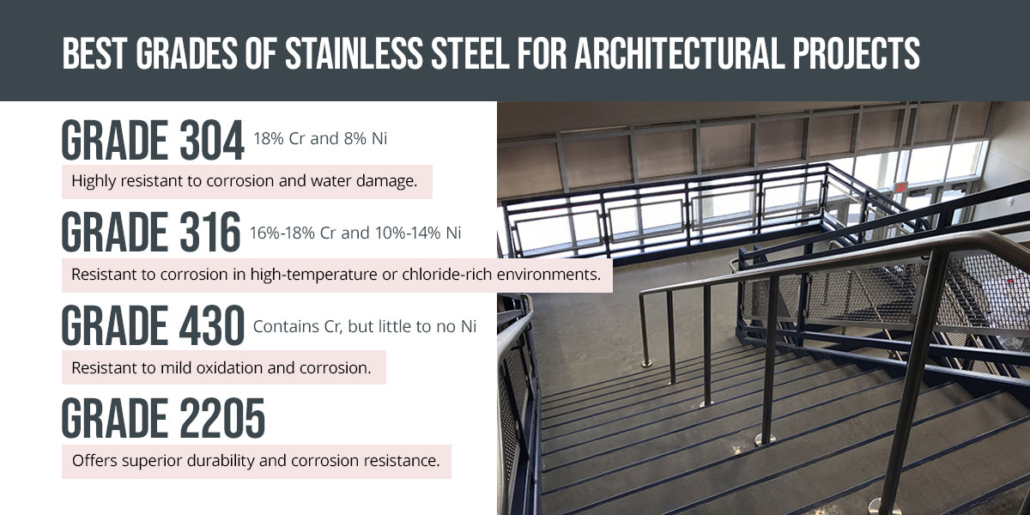
As the most common type of stainless steel, grade 304 contains about 18% chromium and 8% nickel. This combination creates a stable passive layer, making it highly resistant to corrosion and water damage. This austenitic alloy is ideal for metal castings, such as facades, cladding and handrails. It is widely available in many gauges and finishes, with costs ranging from low to moderate.
Corrosive elements from salt spray and de-icing salts can cause staining in 304 stainless steel. Because it is vulnerable to city pollutants and chloride attacks near the coast, grade 304 is best used in areas with a mild climate.
Grade 316
Grade 316 stainless steel contains 16%-18% chromium and 10%-14% nickel. However, the addition of 2% molybdenum makes grade 316 stainless steel particularly resistant to corrosion in high-temperature or chloride-rich environments, such as coastal areas and big cities.
This alloy is extremely useful in urban, marine, food processing and industrial settings. For example, 316 is used in city infrastructure that faces high levels of pollution. You can also find 316 stainless steel in chlorinated fountains and pools.
What is the difference between 304 and 316 stainless steel? While 304 is best for general construction, 316 is better for harsh atmospheres. Grade 316 typically involves higher up-front costs than grade 304, but it offers a better return on investment by minimizing maintenance and replacement costs in high-exposure areas.
Grade 430
As a ferritic stainless steel, grade 430 contains chromium, but little to no nickel. Its resistance to mild oxidation and corrosion makes it a great choice for indoor architectural applications, including appliances and decorative trim. Unlike austenitic grades, grade 430 is useful for magnetic mounting systems.
You can usually find 430 stainless steel at more stable, affordable prices because it contains less nickel. It also offers lower corrosion resistance than the 300 series and can rust when exposed to humid environments.
Grade 2205
Because it combines the structures of austenitic and ferritic grades, 2205 stainless steel offers superior durability and corrosion resistance. As such, grade 2205 is ideal for applications where strength is paramount, such as cladding, beams and bridges, particularly in coastal settings where saltwater exposure is high. This duplex grade is favored in oil, gas, marine and chemical processing industries.
The price of grade 2205 is generally higher than other grades. However, its unique strength allows it to be fabricated in smaller quantities while still carrying the same load.
Choosing the Right Grade for Your Needs
When selecting a stainless steel grade for architectural purposes, it’s important to weigh budget, corrosion resistance and construction needs. Consider the following factors in common stainless steel grades:
| Grade 304 | Grade 316 | Grade 430 | Grade 2205 | |
|---|---|---|---|---|
| Classification | Austenitic | Austenitic | Ferritic | Duplex |
| Corrosion Resistance | High | Very high | Moderate | Extremely high |
| Characteristics | Durable, easy fabrication | Strong, corrosion and temperature resistance | Oxidation and temperature resistance | Structural integrity, corrosion and cracking resistance |
| Environments | Mild, low-risk | Harsh, marine, urban | Mild, low-risk | Harsh, marine, urban |
| Common Applications | Cladding, panels, elevators | Facades, railings, fasteners | Trim, appliances, decoration | Bridges, facades, columns |
| Cost | Low to moderate | Moderate to high | Low | High |
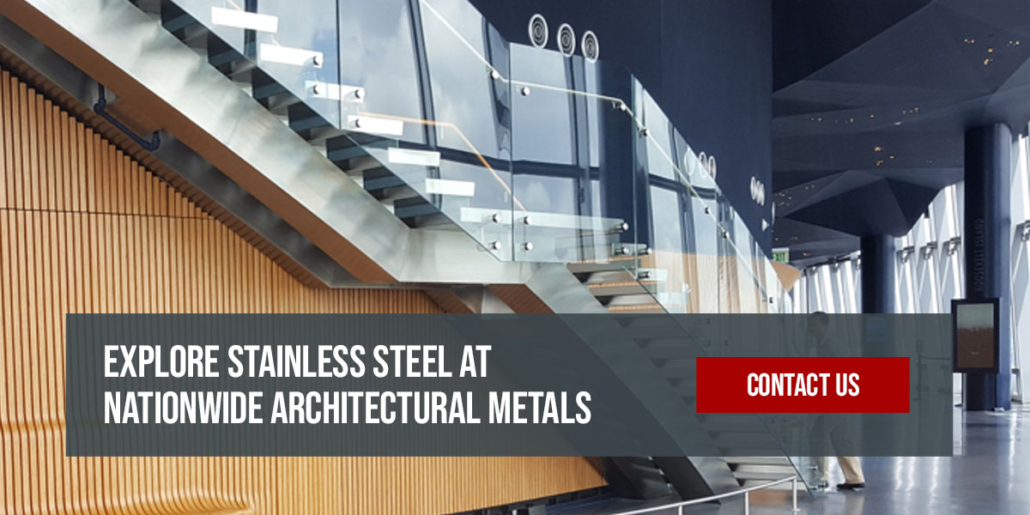
Explore Stainless Steel at Nationwide Architectural Metals
Nationwide Architectural Metals can source and fabricate stainless steel across a variety of grades, including 303, 304, 316 and low-carbon variants. Our stainless steel comes in sheets, plates, tubes, bars and rods for a wide range of commercial and industrial applications. Along with stainless steel, our lineup of pre-polished metals includes brass, bronze and aluminum.
As a leading metal supplier with over 40 years of expertise, Nationwide Architectural Metals is a reliable source of metal fabrication. Our team works closely with estimators and managers to ensure successful outcomes. We understand that each project is different, and we are proud to deliver custom fabrication services tailored to your unique architectural needs.
If you are looking for a specific type of metal, we are ready to bring your unique vision to life. To learn more about the best grades of stainless steel for your project, contact a specialist today.